
Many weight‑loss supplements are built around a single promise:
Feel less hungry, eat less, lose weight faster.
This approach usually relies on stimulant‑driven appetite suppression, designed to reduce cravings and create quick momentum.
At first glance, that can sound appealing.
But over time, more people are beginning to ask a deeper question:
Is controlling appetite the same thing as creating lasting weight loss?
Why appetite suppression feels effective in the beginning
Reducing hunger can make early weight‑loss efforts feel easier because it may:
- Lower short‑term calorie intake
- Reduce cravings during the day
- Create fast, noticeable changes
- Provide an immediate sense of control
These early wins are one reason stimulant‑based products remain popular.
But short‑term ease doesn’t always translate into long‑term sustainability.
The difference between control and consistency
Appetite suppression focuses on managing hunger in the moment.
Sustainable weight loss depends more on repeatable daily behaviors, such as:
- Regular movement
- Consistent sleep
- Predictable routines
- Long‑term habit patterns
When weight management relies only on suppressing appetite, progress can become tied to how long the suppression lasts rather than how strong the habits become.
That distinction matters over time.
Why habits tend to outlast intensity
Lasting weight change is rarely created by one powerful effect.
Instead, it usually comes from small behaviors repeated consistently, including:
- Eating patterns that feel manageable
- Movement that’s comfortable to repeat
- Routines that fit real life
- Sleep that supports recovery and energy
These factors don’t feel dramatic—but they are what make progress sustainable instead of temporary.
Where stimulant‑free approaches shift the focus
Stimulant‑free wellness strategies often move attention away from:
“How do I eat less today?”
and toward:
“What routines can I maintain long term?”
This shift emphasizes:
- Consistency over urgency
- Recovery over stimulation
- Habits over short‑term suppression
For many adults—especially those thinking beyond quick fixes—
this mindset feels more realistic and supportive of lasting wellness.
How Calotren® fits into a habit‑focused approach
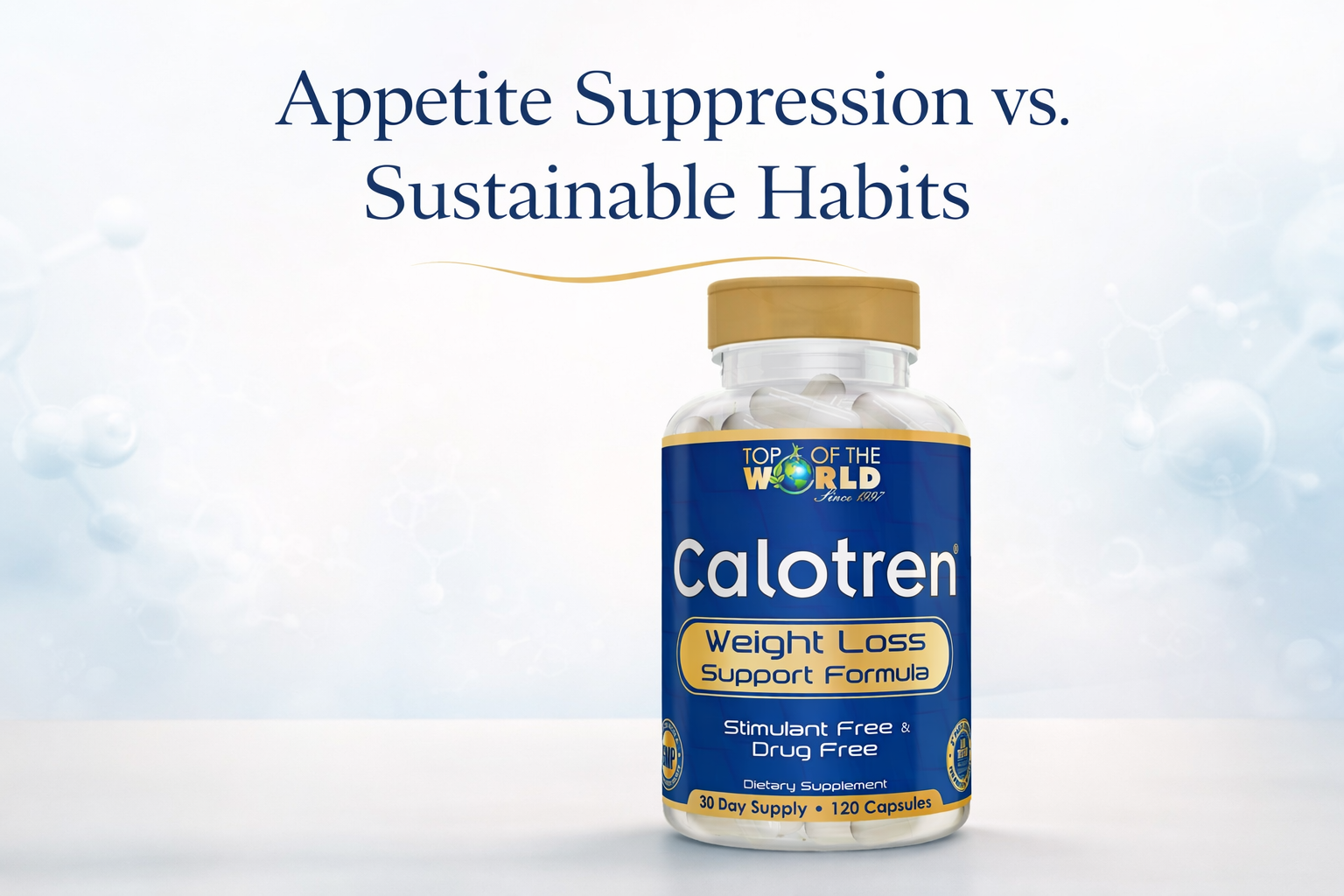
Unlike stimulant‑based appetite suppressants, Calotren is stimulant‑free and non‑habit forming and is designed to be taken at bedtime.
Because it doesn’t rely on daytime stimulation or forced appetite control, it aligns with an approach centered on:
- Sleep‑friendly routines
- Recovery and consistency
- Long‑term behavior support
- Sustainable wellness habits
Rather than creating an intense short‑term effect, the goal is to fit naturally into repeatable nightly patterns—the kind that are easier to maintain over months and years.
Rethinking what “success” really means
Fast appetite control can feel like progress.
But lasting weight loss is usually defined by something quieter:
Stability.
Consistency.
Habits that continue working long after the excitement fades.
This is why many long‑term wellness strategies now focus less on suppression
and more on sustainable daily living.
Bottom line
Appetite‑suppressing stimulants emphasize short‑term control,
while stimulant‑free approaches like Calotren focus on sleep‑friendly routines, habit consistency, and long‑term sustainability.
As the weight‑loss conversation continues to evolve, more people are discovering that
lasting progress is built less on intensity—
and more on the habits that quietly hold everything together.