
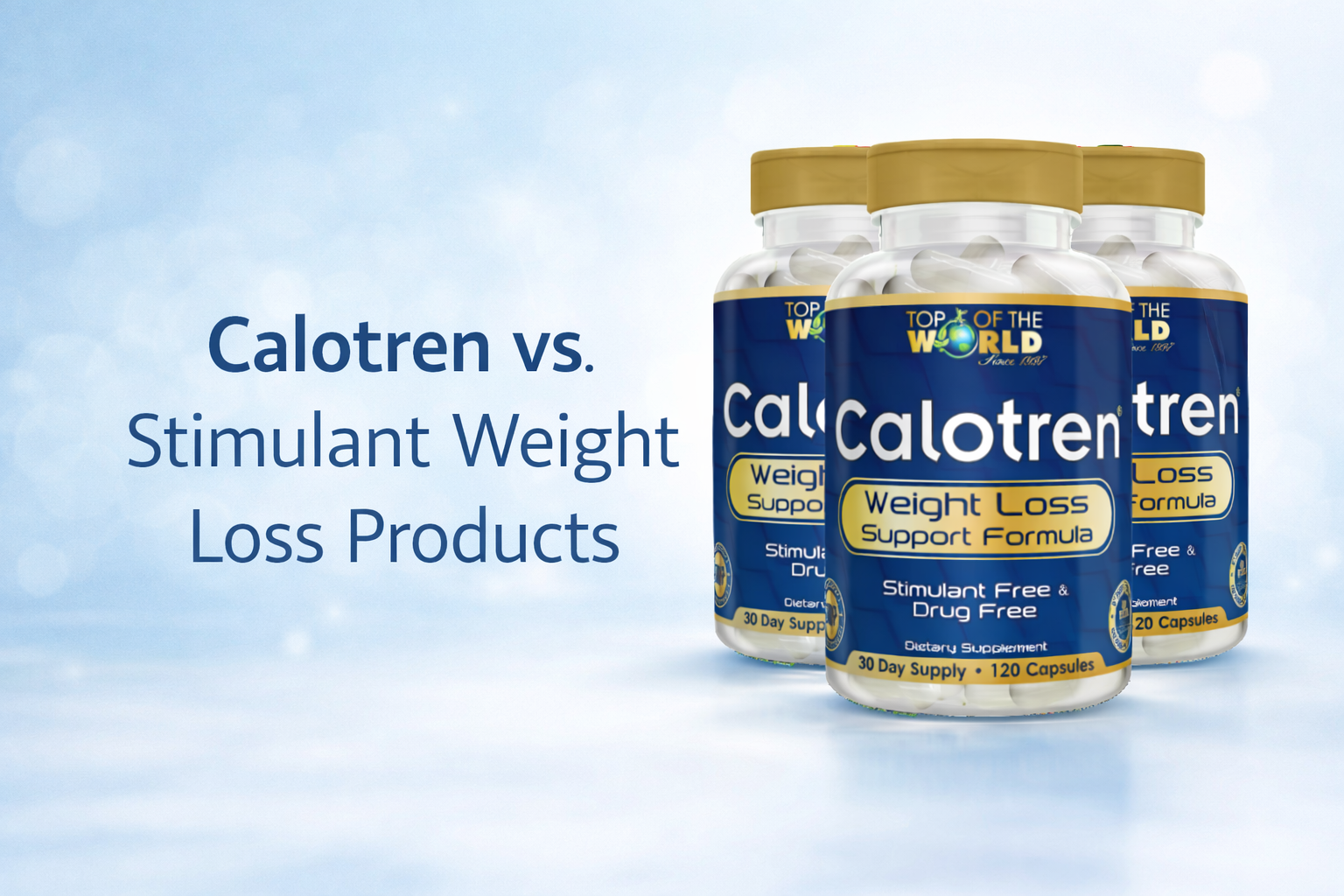
When people begin researching weight‑loss supplements, one of the first things they notice is how different the products can be.
Some focus on energy, appetite suppression, or rapid results, while others are designed around routine, recovery, and long‑term consistency.
Understanding the difference—especially between stimulant‑based products and stimulant‑free options like Calotren—can help clarify which approach fits best with sustainable health goals.
What are stimulant weight‑loss products?
Stimulant‑based supplements typically rely on ingredients intended to:
- Increase energy or alertness
- Suppress appetite
- Boost short‑term metabolic activity
- Create a noticeable “fast” effect
Because of this, they’re often taken during the day and positioned around quick results or intense motivation.
For some people, this feels helpful at first.
For others—especially adults focused on long‑term wellness—it can feel hard to maintain over time.
Why stimulant approaches don’t fit everyone
Energy‑driven weight‑loss products can sometimes:
- Interfere with sleep or relaxation
- Feel too intense for daily, long‑term use
- Create stop‑and‑start consistency
- Emphasize speed over sustainability
These factors don’t make stimulants “bad,”
but they do highlight an important question:
Is the goal fast change—or lasting progress?
How stimulant‑free approaches are different
Stimulant‑free supplements are usually designed around:
- Routine instead of urgency
- Consistency instead of intensity
- Long‑term habits instead of short bursts
Rather than increasing daytime energy, they often fit into evening or recovery‑focused routines, supporting a calmer, steadier approach to wellness.
This shift in design reflects a broader change in how many adults—especially after 40 or 45—think about weight loss:
Sustainability matters more than speed.
Where Calotren® fits in
Calotren is stimulant‑free and non‑habit forming, and it’s designed to be taken at bedtime rather than during the day.
Because it doesn’t rely on energy‑boosting ingredients or appetite suppression, it aligns with an approach centered on:
- Sleep‑friendly routines
- Recovery and consistency
- Long‑term habit support
Instead of creating a dramatic short‑term effect, the focus is on fitting naturally into repeatable nightly wellness patterns—the kind that are easier to maintain over time.
Choosing the approach that matches your goals
Both stimulant and stimulant‑free products reflect different philosophies of weight loss:
- Stimulant approach → energy, urgency, fast change
- Stimulant‑free approach → routine, recovery, sustainability
Neither category is universally right or wrong.
The key is choosing the one that aligns with:
- Your lifestyle
- Your tolerance for intensity
- Your long‑term health priorities
For many adults focused on steady, realistic progress, stimulant‑free routines often feel more sustainable.
Bottom line
Weight‑loss supplements are not all designed the same.
Stimulant‑based products emphasize speed and energy, while stimulant‑free options like Calotren prioritize sleep‑friendly routines, consistency, and long‑term sustainability.
Understanding this difference can make it easier to choose an approach that supports not just short‑term change—but lasting wellness.
Learn More