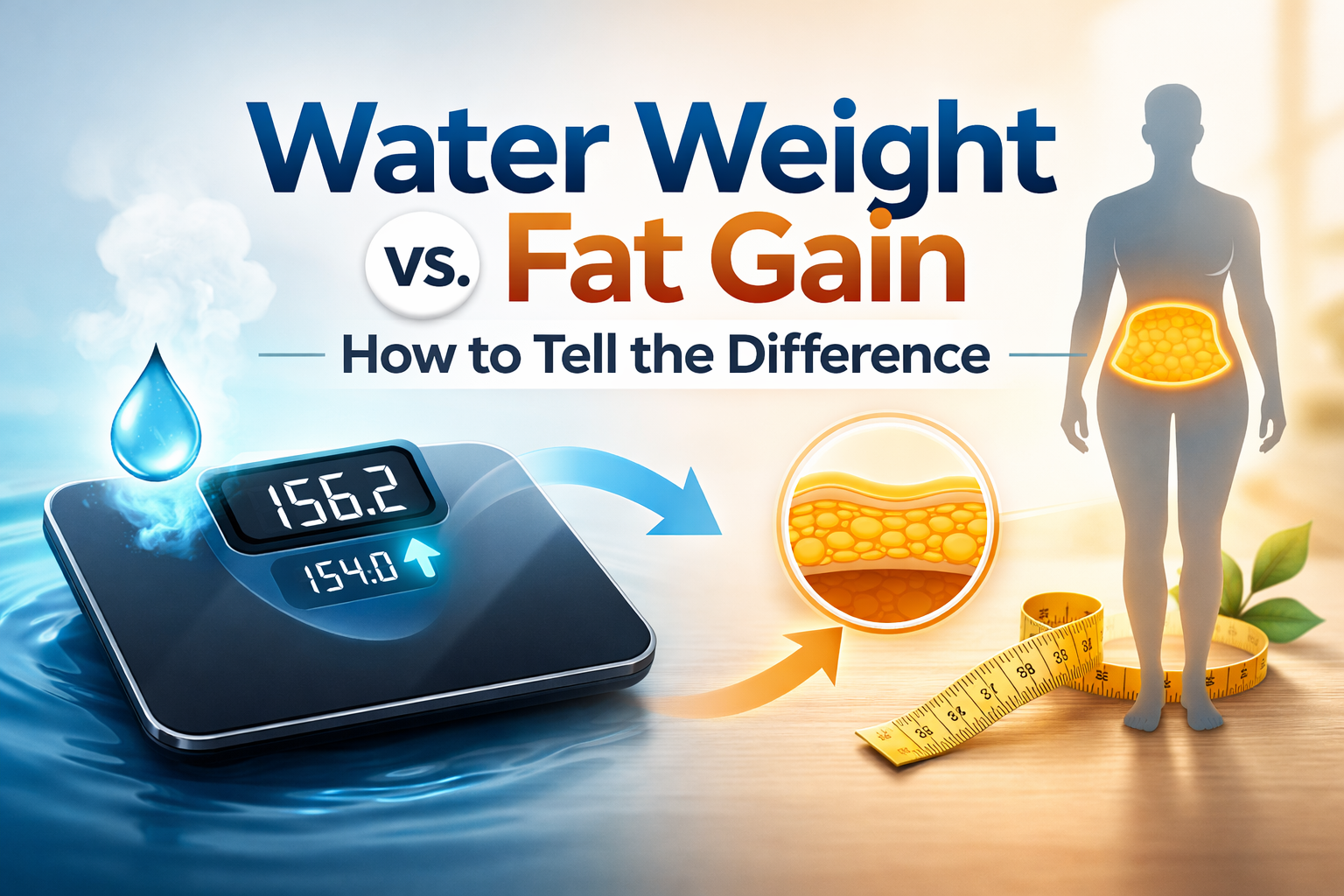
If the scale jumps up overnight, the first thought is often:
“Did I gain fat?”
In most cases, the answer is no.
Understanding the difference between water weight and true fat gain can protect your progress — and your mindset.
First: Fat Gain Is Slow
True fat gain requires a sustained calorie surplus over time.
It does not happen from:
- One higher‑carb meal
- One salty dinner
- One weekend off plan
Fat accumulation is gradual.
Water shifts are fast.
That distinction matters.
What Is Water Weight?
Water weight happens when your body temporarily holds onto fluid.
This can occur due to:
- Increased carbohydrate intake
- Higher sodium intake
- Hormonal changes
- Poor sleep
- Stress
- Inflammation
- Travel or routine disruption
Water weight can increase the scale by 1–5 pounds within 24–48 hours — but it is temporary.
Why Carbs Increase Water Retention
When you eat carbohydrates, your body stores them as glycogen in muscle.
Glycogen binds to water.
For every gram of glycogen stored, several grams of water are stored alongside it.
So if you increase carbs — even healthy carbs — the scale may rise temporarily.
That is not fat gain.
It is fuel storage.
Signs It’s Water — Not Fat
Here’s how to tell the difference:
It’s Likely Water If:
- The increase happened overnight
- You ate more carbs or sodium
- You feel bloated or puffy
- The weight drops within a few days
- Your measurements haven’t changed
It’s Likely Fat If:
- You’ve been in a sustained calorie surplus for weeks
- Measurements are increasing consistently
- Weight trend is rising steadily over time
The key word is trend — not day‑to‑day change.
The Role of Stress and Sleep
Cortisol (your stress hormone) influences fluid balance.
When stress rises or sleep decreases:
- Water retention increases
- Digestion slows
- Inflammation rises
This can create temporary scale spikes that resolve once recovery improves.
This is why sustainable fat loss requires more than just calorie control — it requires supporting the body’s recovery systems.
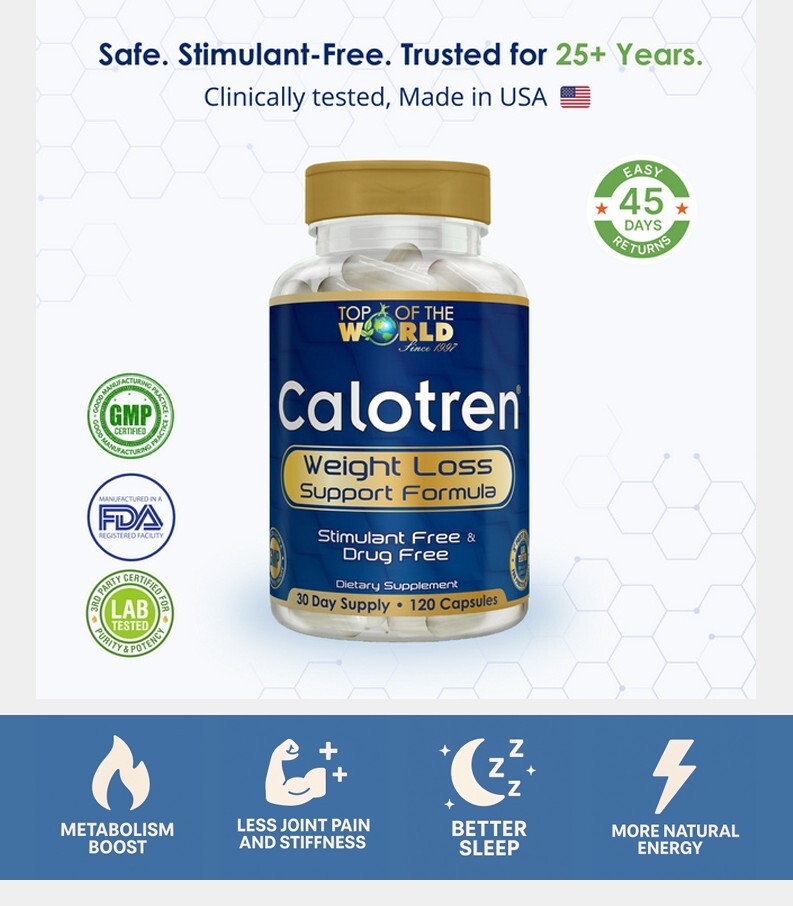
Where Calotren® Fits In
Calotren® is designed to support weight loss through overnight recovery and metabolic support, not short‑term stimulation.
Because it is stimulant‑free and taken at bedtime, it aligns with the body’s natural repair cycle.
It supports:
- Lean muscle preservation
- Healthy digestion
- Recovery processes
- Long‑term consistency
When digestion improves and inflammation is supported overnight, scale fluctuations often become less dramatic over time.
That’s why many customers notice:
- Reduced bloating
- Improved digestion
- Better sleep
- Inch loss before scale movement
It supports body composition — not just a number on the scale.
What to Focus On Instead of Daily Weight
If your goal is sustainable fat loss, track:
- Weekly averages
- Waist measurements
- How your clothes fit
- Strength progress
- Sleep quality
- Digestive comfort
Water weight fluctuates.
Fat loss trends.
The Bottom Line
Water weight and fat gain are not the same.
If your weight jumps quickly, it’s almost always:
- Fluid shifts
- Glycogen storage
- Hormonal changes
- Sodium intake
- Digestive variation
Not fat.
Stay consistent. Support recovery. Preserve lean muscle.
Real fat loss is steady — even when the scale isn’t.